Review Article | | Peer-Reviewed

Environmental Contexts and the Neural Basis of Memory and Spatial Navigation

Received: 18 February 2026     Accepted: 3 March 2026     Published: 17 March 2026
Views:       Downloads:
Abstract

Memory and spatial navigation are essential cognitive skills that enable animals to see, analyze, and interact with their surroundings effectively, promoting learning, adaptation, and survival. These tasks rely on coordinated activity within extensive brain networks, with the hippocampus playing a vital role in the construction of cognitive maps and the processing of environmental data. Studies including animals, human neuroimaging, and ecological research indicate that environmental context significantly influences the brain systems responsible for memory and navigation. This paper analyzes the impact of several environmental factors specifically enrichment, deprivation, stress, ecological demands, developmental experiences, and modern technology on spatial cognition. Enriched, complex surroundings enhance hippocampus neuroplasticity, refine synapse architecture, and solidify cortical representations, resulting in superior navigational flexibility and memory retention. Conversely, impoverished or monotonous conditions, stress, and social deprivation can impair hippocampal function, reduce cognitive flexibility, and hinder spatial learning. Ecological and evolutionary constraints also influence species-specific navigational adaptations, shown in variations in hippocampus shape and neuronal circuitry. In humans, contemporary lifestyle alterations present supplementary obstacles to innate navigational skills. Urbanization and the prevalent use of GPS technology are associated with diminished activation of hippocampal-dependent spatial strategies, potentially undermining the construction of cognitive maps over time. This mini review presents mechanistic evidence from rodent studies and human neuroimaging to create an integrated framework showing how environmental inputs affect memory systems at cellular, circuit, and network scales. Understanding these interactions can lead to translational opportunities in cognitive resilience, aging, rehabilitation, and neuroscience-based architectural design.

Published in European Journal of Clinical and Biomedical Sciences (Volume 12, Issue 1)
DOI 10.11648/j.ejcbs.20261201.12
Page(s) 7-16
Creative Commons

This is an Open Access article, distributed under the terms of the Creative Commons Attribution 4.0 International License (http://creativecommons.org/licenses/by/4.0/), which permits unrestricted use, distribution and reproduction in any medium or format, provided the original work is properly cited.

Copyright

Copyright © The Author(s), 2026. Published by Science Publishing Group

Keywords

Environmental Enrichment, Spatial Navigation, Memory, Hippocampus, Stress, Ecological Adaptation, Cognitive Maps, Spatial Complexity

1. Introduction
Memory and spatial navigation are essential for adaptive cognition, helping organisms find resources, avoid dangers, and handle social and territorial activities. While they are often connected, navigation and episodic memory are distinct but related cognitive functions. Navigation depends on real-time processing of self-motion and sensory data to direct actions, while episodic memory involves mentally reconstructing past experiences and their contextual details. recent studies highlight both shared and unique neural processes involved in these functions, engaging the hippocampus, entorhinal cortex, posterior parietal cortex, prefrontal cortex, and striatum . Although the hippocampus was long regarded as the central structure for a stable, allocentric “cognitive map," it is now understood to result from dynamic interactions among medial temporal lobe regions and broader cortical–striatal networks . These networks facilitate spatial encoding, strategic decision-making, working memory, and habit formation . Crucially, the balance among these systems is not fixed but is constantly fine-tuned according to environmental context.
The environmental context plays a crucial role in regulating neural systems related to memory and navigation. Environments that are rich in spatial complexity, novelty, and multisensory inputs promote hippocampal neuroplasticity, enhance synaptic connections, and support the maintenance of cortical representations during learning. Research indicates that environmental enrichment enhances adult hippocampal neurogenesis and facilitates the consolidation of spatial memories throughout the system . Such environments help preserve functional separation within large sensory and associative networks, promoting multisensory integration and adaptable navigation . Conversely, deprived or monotonous settings decrease exploratory behaviors, lower hippocampal plasticity, and hinder spatial learning .
Stress and unpredictable environments add extra regulatory challenges. Chronic stress raises glucocorticoid levels, disrupts synaptic plasticity, and hinders neurogenesis, especially in the dentate gyrus . Behaviorally, it encourages fixed stimulus–response navigation strategies driven by striatal circuits, which reduces dependence on the flexible hippocampal cognitive maps . Social isolation additionally affects brain organization by decreasing network segregation and impairing sensory processing . Overall, these findings indicate that environmental deprivation weakens neural systems critical for adaptive spatial memory.
Environmental influences go beyond laboratory conditions. Human neuroimaging and behavioral studies show that factors like environmental structure, social context, and developmental experiences significantly influence spatial cognition over . Individuals raised in complex environments generally excel in wayfinding and adopt more adaptable navigation strategies . In contrast, frequent reliance on digital navigation tools is linked to reduced hippocampal activity during independent navigation . This underscores the environment's active influence, directly affecting the biological bases of memory across cellular, circuit, and network scales.
In this context, memory and navigation should be understood as environmentally embedded cognitive systems. Their neural foundations are dynamically sculpted by sensory richness, social interaction, architectural structure, stress exposure, and technological dependence . Appreciating this environmental modulation provides a mechanistic framework for understanding cognitive resilience and vulnerability across the lifespan.
2. Distributed Neural Architecture of Spatial Cognition
Spatial memory does not arise from the operation of a single brain structure; instead, it reflects the coordinated interactions within a distributed and hierarchically organized neuronal system . Initial models designated the hippocampus as the primary locus of spatial representation; however, contemporary research indicates that navigation and memory arise from the dynamic interactions of medial temporal, parietal, frontal, and striatal networks . Notably, it must understand how this distributed architecture works to understand how the environment influences spatial cognition.
Allocentric spatial processing is centered in the hippocampus. It helps landmarks, boundaries, and other contextual clues stay together . Hippocampal place cells encode location-specific firing patterns, aiding the formation of map-like internal memories . These representations are not static; they are continuously updated through interactions with the entorhinal cortex, where grid cells create a framework for measuring distance and orientation . These parts of the medial temporal lobe work together to assist the brain figure out where things are in space without using sensory information right away. This makes it easier to go around in places where things are continually changing.
Allocentric mapping alone does not cover the full of navigational behavior. The posterior parietal brain enables egocentric spatial changes by integrating visual, proprioceptive, and vestibular information . This area is highly crucial for changing allocentric representations into action-oriented coordinates, which helps people figure out where things are in respect to their bodies. Parietal areas also help us focus on essential things in the surroundings, like landmarks and boundaries. This changes how much weight spatial cues get when they are being encoded.
The prefrontal cortex is very important for strategic control of navigation. The prefrontal cortex is in charge of working memory activities that help to plan the route, keeps an eye on how unpredictable the environment is, and makes it easy to transition between different navigation strategies . When a chosen path is no longer effective or when unexpected obstacles arise, prefrontal networks help to readjust spatial plans by using either hippocampal mapping processes or habit-based systems.
The striatum, particularly the caudate nucleus, aids in learning how to react to stimuli and navigate , in addition to the connections between the medial temporal and cortical areas. Instead of remembering how diverse stimuli are related to each other, striatal circuits learn how to do things in order depending on particular signals in the environment, like "turn left at the second intersection." . This kind of navigation works well and doesn't take up a lot of mental space, especially in stable areas where it can automate routes to follow again and over again. The striatal and hippocampal systems share a relationship that is both competitive and cooperative, which is very important . When hippocampal activation decreases—due to stress, aging, or technological outsourcing—striatal habit systems generally dominate .
The interaction among these systems enables the selection of adaptive strategies. Cognitive mapping that relies on the hippocampus is the most common in novel, ambiguous, or spatially complex settings . When this happens, spatial layouts need to be combined and changed in a way that is easy to do. In contrast, in predictable situations or those that have been overly familiarized, striatal stimulus-response techniques can efficiently guide behavior without requiring exact spatial representations . The prefrontal cortex controls which system is activated first based on the situation .
The design of large-scale networks influences spatial cognition, alongside localized specialization. Functional connection studies demonstrate that effective navigation necessitates communication among the hippocampus, sensory networks, and associative networks . Environmental enrichment enhances the differentiation among these networks, facilitating the brain's integration of information from many modalities and improving the signal-to-noise ratio in spatial encoding . Conversely, social isolation or insufficient environmental stimulation may diminish network segregation, thereby complicating the integration of visual, tactile, and vestibular information essential for accurate orientation.
Recent imaging investigations demonstrate that spatial representations extend beyond hippocampal circuitry into secondary motor and cortical association areas. Enriched environments accelerate the stabilization of cortical spatial representations during learning, suggesting that hippocampo-cortical linkages enhance the consolidation of spatial memory systems . As a result, spatial cognition should not be seen as a limited function of the hippocampus, but rather as a widespread network activity that is constantly rearranging in response to changes in the environment.
It is also important that this distributed design is developmentally calibrated and sensitive to the environment. Early exposure to spatial complexity boosts hippocampal activation and promotes flexible navigation techniques ; nevertheless, reduced contextual diversity biases the system toward habit-based learning . Moreover, recurrent reliance on GPS navigation has been associated with reduced hippocampal-dependent strategy use and increased activation of caudate-mediated stimulus-response pathways . These results bolster the idea that the equilibrium among hippocampus, cortical, and striatal systems is not inherent but is dynamically influenced by experience.
In conclusion, spatial cognition emerges from an integrated neurological framework in which hippocampal mapping, parietal transformations, prefrontal strategy management, and striatal habit acquisition operate within vast functional networks. Environmental factors influence the connectivity and strength of these systems, thereby impacting the efficacy and ease of spatial memory across the lifespan .
3. Environmental Context as a Regulator of Spatial Memory Systems
Environmental context is becoming recognized not merely as a backdrop for cognitive processes, but as a fundamental regulator of the neural architecture that supports memory and spatial navigation. The capacity to generate internal spatial representations and retrieve contextual information depends on brain systems that exhibit considerable change across the lifespan. These systems adapt to environmental changes like stress, new stimuli, and organizational shifts. Therefore, contextual factors continuously influence the performance, stability, and balance of distributed memory networks. Hippocampal plasticity greatly improves in enriched environments that feature spatial variety, multisensory stimulation, and exploration opportunities. Animal studies show that environmental enrichment encourages neurogenesis in the adult dentate gyrus, enhances dendritic branching, and reinforces synaptic connections . These structural changes are significant; new granule cells improve the ability to distinguish patterns and encode similar spatial scenarios more flexibly. These cellular adaptations provide a mechanical foundation for enhanced spatial learning in more complex environments.
Enrichment impacts systems-level organization as well as the hippocampus. Esteves et al. (2026) employed in vivo imaging to illustrate that animals in enriched surroundings display accelerated stability of cortical spatial representations during novel learning tasks. Notably, enhanced animals exhibited accelerated reactivation of task-related neural patterns and decreased representational drift across training days. These findings suggest that contextual complexity improves hippocampo-cortical connectivity and facilitates efficient systems consolidation. Spatial memory, therefore, becomes more robust due to enhanced local plasticity and improved coordination between medial temporal and neocortical areas.
The impact of environmental structure extends into extensive network dynamics. Functional neuroimaging research shows that enriched environments help preserve segregation in sensory and associative networks, leading to more efficient multisensory integration . Proper segregation improves the signal-to-noise ratio in sensory processing and supports the integration of visual, tactile, and proprioceptive inputs, which are vital for accurate navigation. Conversely, being alone in a dull setting can diminish network segmentation effectiveness and alter cortico-thalamic communication, potentially impairing spatial encoding accuracy . Stress and uncertainty in the environment contribute more modulation. Long-term exposure to stress hormones disrupts hippocampal synaptic plasticity and suppresses neurogenesis, leading to compromised spatial memory function . Stress has a big effect on both the structure of things and the choice of strategy. When people are stressed, they are more likely to learn through striatal stimulus-response learning than through hippocampal cognitive mapping . Habit-based navigation might be helpful when things are predictable, but it makes things less adaptable when things are continuously changing. So, when the environment is unpredictable, it can modify how the hippocampus and striatal systems compete with each other.
Environmental factors influence more than just early development. Research shows that cognitive enrichment in adulthood can reverse spatial memory deficits caused by early-life stress, also leading to reorganization of dentate gyrus–CA3 synaptic connections . These results highlight the lasting plasticity of memory systems and the therapeutic potential of controlled environmental interventions. Importantly, environmental manipulation transcends experimental boundaries. Research on individuals indicates that environmental arrangement similarly influences navigation. People raised in diverse environments tend to be better at navigation and using different techniques . On the other hand, heavy reliance on GPS has been linked to lower hippocampus activity during self-navigation and greater engagement of caudate-driven habit processing . These findings show that contextual factors, particularly technological ones, influence the neural basis of spatial cognition. The architectural environment plays a crucial role, especially for older adults. Older individuals tend to depend more on prominent landmarks than on geometric cues when navigating. Environments with distinct landmarks and clear spatial cues can support alternative navigation strategies and help mitigate age-related decline. Conversely, habitual dependence on GPS navigation has been linked to diminished hippocampus activation during self-directed navigation and a corresponding rise in caudate-mediated habit processing . These results demonstrate that contextual factors, especially technological contexts, modify the neurological foundations of spatial cognition. Architectural environments greatly impact navigation, especially in older adults. Older individuals tend to rely more on distinctive landmarks than on geometric cues when moving through spaces . Environments that include memorable landmarks and clear spatial cues can support alternative navigation strategies and help mitigate age-related deficits. Together, these results point to a single idea: the environment affects spatial memory at different levels of brain architecture. Enrichment improves neurogenesis and synaptic strength at the cellular level. It stabilizes hippocampo-cortical representations at the circuit level. At the network level, it maintains functional segmentation and multisensory integration. On the other hand, lack of resources and stress make these processes less stable and make people think in rigid, habit-based ways. Understanding memory as a biologically embedded system in the environment offers a mechanical foundation for comprehending cognitive resilience and vulnerability throughout the lifespan.
4. Environmental Deprivation, Stress, and Strategy Bias
Enriched environments promote plasticity and adaptive flexibility, while environmental deprivation and chronic stress undermine the brain systems that facilitate spatial memory. The hippocampus is particularly vulnerable to prolonged stress exposure. Long-term elevations in glucocorticoids, indicative of chronic stress, impede long-term potentiation, halt adult hippocampal neurogenesis, and diminish the efficacy of dendritic arborization in CA3 and dentate gyrus neurons . These structural and synaptic changes make it harder for the hippocampus to store relational spatial information and combine contextual stimuli over time. Stress impacts more than just the hippocampus; it alters how various navigation systems coordinate. In unpredictable or challenging environments, people tend to depend more on stimulus–response strategies managed by the striatum, instead of hippocampal-based cognitive maps . While striatal strategies work well for repetitive or predictable routes, they are less adaptable in dynamic or ambiguous scenarios. Stress not only hampers memory but also influences strategy choice by favoring habitual brain pathways. Social isolation functions as an environmental deprivation that significantly impacts brain activity. Brain imaging studies suggest that isolation diminishes the distinction between sensory and associative networks, leading to changes in multisensory processing and lower network coherence . Successful navigation depends on integrating visual, proprioceptive, and vestibular information. When these networks become less distinct, this integration becomes less accurate, impairing spatial encoding and retrieval. These results suggest that deprivation influences not only cellular plasticity but also the overall functional architecture necessary for adaptive cognition. Deprivation has particularly intense effects during critical developmental periods. Early-life stress has been associated with enduring impairments in spatial memory and irreversible reduction in hippocampal size. In a longitudinal study, Shobe et al. (2025) demonstrated that mice subjected to early-life stress showed persistent issues in hippocampal-dependent navigation tasks. Notably, these problems were associated with changes in synaptic connections between the dentate gyrus and CA3, indicating that early stress can reconfigure hippocampal circuitry in a way that endures into adulthood. Although later-life enrichment partially improved performance, the results highlight the long-term impact of environmental deprivation on memory functions.
5. Network-Level Organization and Sensory Integration
The effects of environmental context extend well beyond localized synaptic or hippocampal plasticity to influence the organization of large-scale brain networks . Spatial navigation requires coordinated integration of multisensory information including visual, tactile, vestibular, and proprioceptive signals within distributed cortical and subcortical systems . Efficient navigation in complex environments depends not only on the strength of individual neural circuits but also on the degree to which functional networks remain segregated yet dynamically interactive . Recent brain-wide functional imaging studies provide compelling evidence that environmental conditions shape these network properties. You et al. (2025) used sensory stimulus–evoked and resting-state functional MRI to show that environmental enrichment helps preserve and improve the functional separation among sensory and associative networks in the mouse brain. In enriched environments, the visual, olfactory, and somatosensory systems showed distinct yet coordinated activation patterns. This indicates that environmental complexity improves the organized processing of information across different sensory modalities. Such separation is crucial for preventing cross-modal interference and aids in effective integration when adaptive responses are required . Animals exposed to social isolation showed reduced network segregation and changes in cortico-thalamic connectivity . Rather than keeping sensory processing streams distinct, isolated animals displayed more overlap and less differentiation among sensory networks. This reduced segregation probably indicates a decline in multisensory coordination accuracy. In spatial navigation, precise encoding of boundaries, landmarks, and self-motion cues is crucial . Impaired segregation may interfere with the integration of environmental signals, hindering the formation of stable spatial representations.
Multisensory integration is an active process that depends on the integrity of distributed networks, not just a passive merging of inputs . Proper functional segregation enables primary sensory cortices to perform modality-specific tasks, while higher-level associative regions coordinate information . Environmental enrichment appears to strengthen this balance by enhancing responses in higher-order visual and sensorimotor cortices and increasing network coherence . These changes likely improve the encoding of environmental features and make spatial mapping more reliable. These findings affect cognitive flexibility by illustrating how the organization of large-scale networks influences the ability to switch between different navigation strategies, like allocentric and egocentric . Maintaining network segregation enhances effective communication between hippocampal and parietal–prefrontal systems, which is crucial for adapting to environmental changes. On the other hand, decreased segregation may hinder the dynamic interactions needed for switching strategies, resulting in less adaptable navigation. These findings support broader theories that propose spatial memory results from interactions among distributed networks instead of being localized to specific brain regions . The environmental context impacts spatial cognition by not only affecting hippocampal plasticity but also reorganizing the overall functional network. Enriched environments help preserve the balance between network differentiation and integration, while deprivation can disturb this balance, possibly impairing the accuracy and flexibility of spatial memory systems. In summary, environmental complexity influences spatial cognition by affecting whole-brain network dynamics. Key neural processes, such as functional segregation and multisensory integration, serve as essential substrates through which environmental experiences impact navigation and memory throughout life.
6. Ecological Structure, Developmental Calibration, and Aging in Spatial Navigation
Spatial navigation develops in conjunction with environmental structure; it is continually refined through ongoing interaction with complex surroundings. The physical and social environments encountered during development shape the growth and organization of brain systems responsible for spatial cognition. Research from human and animal studies shows that exposure to varied and rich environments enhances hippocampal activity and supports adaptable navigation strategies . Individuals raised in areas featuring irregular street patterns, shifting landmarks, and non-grid layouts often navigate more effectively than those from more predictable, grid-based setups . This suggests that early exposure to complex environments enhances and sharpens allocentric spatial skills. Regular encounter with spatial complexity during growth can improve hippocampal-dependent encoding without interfering with the striatal habit systems . Instead of encouraging strict stimulus-response behaviors, such environments foster relational processing, boundary integration, and adaptable route planning. Over time, these challenges likely enhance hippocampo-cortical connections and support the development of cognitive maps . Animal research also supports that environmental factors can shape brain structure. Species living in complex habitats such as those needing food caching, long-distance navigation, or exploring varied environments tend to have larger hippocampi and better spatial memory . Research on environmental enrichment in mice shows that making their living spaces more complex helps the hippocampus grow more neurons and makes them better at learning . This supports the idea that neurological systems change their structure to meet the needs of the environment . These findings highlight an evolutionary continuity: environmental structure and brain plasticity are interrelated.
The ecological context's influence extends beyond growth to include aging. As people age, there are reductions in hippocampus size, weaker functional connections, and decreased efficiency in allocentric navigation . As hippocampal function decreases, older adults often rely more on landmarks for navigation instead of geometric or relational maps . While landmarks can be helpful in familiar surroundings, relying solely on them might limit adaptability in unfamiliar or changing environments.
Architectural design is vital for addressing age-related cognitive changes. Environments that emphasize unique landmarks, clear visual cues, and simple layouts can help older people navigate more easily . Utilizing clear visual signals and simpler spatial arrangements reduces confusion and may help slow hippocampal degeneration, thereby promoting greater spatial independence. In contrast, environments that are overly uniform or visually repetitive can increase confusion, especially for vulnerable groups.
7. Digital Navigation and an Integrated Model of Environmental Regulation
The swift integration of digital navigation tools, like GPS and smartphone mapping apps, changes how the environment impacts spatial memory. Unlike traditional factors such as enrichment or deprivation, technological navigation involves cognitive outsourcing, with external devices managing tasks like route planning and spatial updates. Although these tools enhance efficiency and convenience, recent studies suggest that frequent reliance on GPS might interfere with the brain circuits responsible for navigation. Dahmani and Bohbot (2020) observed that people who often rely on GPS typically score lower on hippocampus-dependent spatial memory tasks when they navigate without digital help. Long-term data showed that increased dependence on GPS over time was linked to a greater decline in spatial memory abilities . These results indicate that regularly depending on external guidance for navigation can decrease hippocampal activity involved in cognitive mapping, promoting stimulus–response strategies driven by the caudate nucleus . GPS directions, typically given as sequences of motor commands such as "turn left in 200 meters," make route-following easier than memorizing environmental layouts. Over time, this reduction in hippocampal activity could weaken flexible spatial representations and impair the brain's capacity to adapt to new situations .
These data can be understood within a comprehensive hierarchical framework of how environmental regulation influences spatial memory. Environmental factors impact brain organization at multiple levels. Environmental complexity affects neurogenesis, dendritic arborization, and synaptic plasticity in hippocampal circuits . Rich spatial experiences cause structural modifications that enhance pattern separation and improve encoding accuracy . Conversely, conditions that reduce exploratory activity such as boredom, stress, or automated technology may diminish activity-dependent plasticity . Environmental factors influence communication between the hippocampus and cortical areas at the circuit level. An enriched environment accelerates the stabilization of cortical spatial representations during learning, indicating that hippocampo-cortical consolidation processes are functioning more effectively . In contrast, stress and lower environmental engagement direct processing toward striatal pathways, resulting in impaired flexible mapping . Technology-based navigation seems to produce a similar effect, favoring procedural route execution over allocentric maps .
Environmental considerations influence the integrity and separation of distributed functional systems at the network level. Enriched environments promote efficient multisensory integration and maintain network segregation. Conversely, deprivation and isolation weaken this segregation and alter sensory processing dynamics . Additionally, digital automation that decreases environmental interaction might hinder the network-level interactions crucial for adaptive spatial encoding . Different levels of hierarchy are interconnected, with cellular plasticity supporting circuit stability and stable interactions maintaining network organization . Environmental factors whether ecological, social, architectural, or technological have cascading effects across structural and functional levels. Digital navigation should be seen not just as a single behavior but as part of this broader environmental regulation system. Altering the frequency and manner of hippocampal circuit usage through technological outsourcing could subtly influence brain strategy choices, potentially impacting long-term cognitive resilience . Highlighting digital navigation within this integrated framework underscores an important point: spatial memory systems remain adaptable and sensitive to environmental changes across our lifespan. The environments we design, much like technology ecosystems, continually shape the neural bases of flexible and adaptive thinking.
8. Conclusion
Spatial memory and navigation are not fixed cognitive capacities but dynamically regulated neural processes embedded within environmental context. Across levels of biological organization from adult hippocampal neurogenesis and synaptic remodeling to hippocampo-cortical consolidation and large-scale network segregation environmental conditions exert continuous influence over how spatial information is encoded, stabilized, and retrieved. Enriched and spatially complex environments strengthen structural plasticity, enhance representational stability, and preserve multisensory network differentiation, thereby supporting flexible allocentric mapping. In contrast, deprivation, chronic stress, and reduced cognitive engagement recalibrate neural processing toward striatal stimulus–response strategies, diminishing the adaptability of spatial cognition . Importantly, modern technological ecosystems are a subtle yet widespread environmental influence. Habitual reliance on externally guided navigation reduces the necessity for active relational encoding and has been associated with decreased hippocampal-dependent strategy use . Although digital tools enhance navigational efficiency, their long-term influence on hippocampo-cortical dynamics remains insufficiently understood. Viewed within a broader environmental framework, technological outsourcing may represent a modern shift in how spatial systems are engaged and maintained. The convergence of experimental, neuroimaging, and ecological evidence supports a hierarchical model in which environmental inputs regulate spatial cognition at interdependent cellular, circuit, and network scales. Cellular plasticity provides the substrate for circuit stabilization; stabilized circuits sustain efficient large-scale network organization; and network integrity enables flexible strategy selection. Environmental conditions that reduce exploratory demand or sensory diversity may gradually erode this multi-level integration, whereas cognitively demanding environments reinforce it. Future research should go beyond analyzing individual brain regions and instead explore how built, social, and technological environments interact with distributed neural systems over time. Techniques like longitudinal neuroimaging, cross-cultural environmental research, and translational interventions will be crucial for discovering whether environmental factors can enhance cognitive resilience or mitigate age-related decline. Combining neuroscience with architectural design, urban planning, and digital interface development could be one of the most scalable methods for maintaining spatial skills in increasingly automated societies. In the end, spatial memory should be viewed not only as a function of the hippocampus but as a biological system influenced by environmental factors. Recognizing this dynamic interaction between the brain and environment alters the perspective of navigation from a static skill to an adaptable process, continually shaped by personal experiences. This perspective improves theoretical memory models and provides practical strategies for sustaining cognitive flexibility across the lifespan. Ultimately, spatial memory should be seen not just as a hippocampal function but as a biological system tuned by environmental factors. Understanding this dynamic interaction between the brain and environment shifts the view of navigation from a static ability to an adaptable process, constantly shaped by lived experiences. This approach enhances theoretical memory models and offers practical ways to maintain cognitive flexibility throughout life.
Future research should prioritize longitudinal, mechanistic, and translational studies to explore how continuous environmental exposures affect spatial memory over time. Extended neuroimaging efforts that track hippocampo-cortical connectivity in various architectural, ecological, and technological contexts can determine if environmental effects cause reversible changes or lasting structural modifications. Examining different cultural and ecological settings may help clarify how factors like urban density, spatial complexity, and socio-environmental diversity influence the development of allocentric strategies across populations. Additionally, including virtual reality, real-world navigation tasks, and wearable neurophysiological monitoring in experiments can connect laboratory findings with practical, real-world applications. At the translational level, it is essential to test controlled environmental enrichment protocols as non-pharmaceutical strategies for age-related cognitive decline, stress-induced memory problems, and neurodevelopmental vulnerabilities. Moreover, collaboration across neuroscience, architecture, urban planning, and digital interface design is essential for creating physical and technological environments that promote hippocampal activity and enhance long-term cognitive health, particularly as society advances toward greater automation.
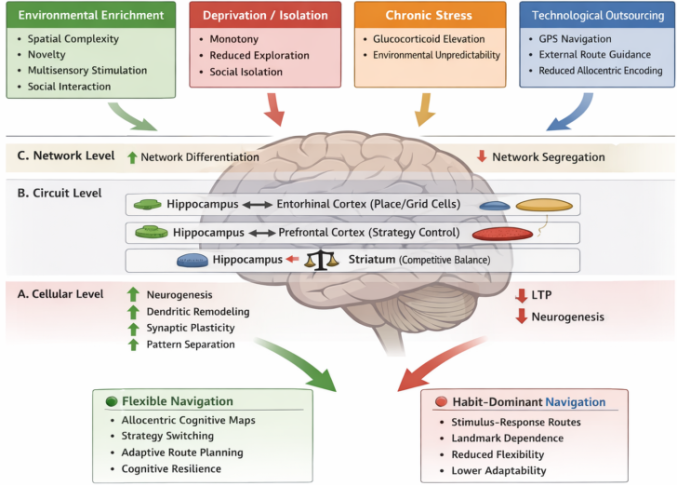
Figure 1. Environmental control of spatial memory at cellular, circuit, and network levels.
Environmental factors, such as enrichment, deprivation/isolation, chronic stress, and technological outsourcing (e.g., GPS navigation), influence spatial cognition across several hierarchical levels of brain architecture. Enriched environments promote hippocampal neurogenesis, dendritic remodeling, synaptic plasticity, and pattern separation at the cellular level, while stress and deprivation inhibit long-term potentiation (LTP) and neurogenic processes. At the circuit level, environmental factors modulate the interactions between the hippocampus and entorhinal cortex (spatial encoding), the prefrontal cortex (strategy control), and the striatum (stimulus–response learning), thereby affecting the competitive equilibrium between flexible allocentric mapping and habit-based navigation strategies. At the network level, enrichment facilitates functional differentiation and efficient multisensory integration across distant brain systems, whereas deprivation and stress diminish network segregation and coherence. These brain impacts at different levels come together to affect behavior, making navigation more likely to use either flexible, cognitively map-based tactics or inflexible, habit-dominant stimulus–response routes.
Abbreviations

CA3

Cornu Ammonis area 3

CN

Caudate Nucleus

DG

Dentate Gyrus

EE

Environmental Enrichment

EC

Entorhinal Cortex

fMRI

Functional Magnetic Resonance Imaging

GPS

Global Positioning System

HPC

Hippocampus

LTP

Long-Term Potentiation

MTL

Medial Temporal Lobe

PFC

Prefrontal Cortex

PPC

Posterior Parietal Cortex

S–R

Stimulus–Response

S1

Primary Somatosensory Cortex

V1

Primary Visual Cortex

Acknowledgments
The authors thank Dr. Balanehru Subramanian for his encouragement and Sri Balaji Vidyapeeth for support.
Author Contributions
Durairaj Ragu Varman: Conceptualization, Data curation, Formal analysis, Investigation, Methodology, Resources, Software, Supervision, Validation, Visualization, Writing – review & editing
Durga Subramanian: Writing – original draft
Dhevi Mirudula Sri: Writing – original draft
Fairen Angelin Jayakumar: Writing – review & editing
Conflicts of Interest
The authors declare no conflicts of interest.
References
[1] Ekstrom AD, Hill PF. Spatial navigation and memory: A review of the similarities and differences relevant to brain models and age. Neuron. 2023 Apr 5; 111(7): 1037-1049.
[2] Eichenbaum H. Memory: Organization and Control. Annu Rev Psychol. 2017 Jan 3; 68: 19-45.
[3] Moscovitch M, Cabeza R, Winocur G, Nadel L. Episodic Memory and Beyond: The Hippocampus and Neocortex in Transformation. Annu Rev Psychol. 2016; 67: 105-34.
[4] O'Keefe J, Dostrovsky J. The hippocampus as a spatial map. Preliminary evidence from unit activity in the freely-moving rat. Brain Res. 1971 Nov; 34(1): 171-5.
[5] Buzsáki G, Moser EI. Memory, navigation and theta rhythm in the hippocampal-entorhinal system. Nat Neurosci. 2013 Feb; 16(2): 130-8.
[6] Goodman J, Packard MG. Memory Systems and the Addicted Brain. Front Psychiatry. 2016 Feb 25; 7: 24.
[7] Kempermann G, Kuhn HG, Gage FH. More hippocampal neurons in adult mice living in an enriched environment. Nature. 1997 Apr 3; 386(6624): 493-5.
[8] Khalil MH. Environmental enrichment: a systematic review on the effect of a changing spatial complexity on hippocampal neurogenesis and plasticity in rodents, with considerations for translation to urban and built environments for humans. Front Neurosci. 2024 Jun 11; 18: 1368411.
[9] Esteves IM, Chang H, Neumann AR, McNaughton BL. Environmental enrichment accelerates the stabilization of cortical representation during de novo learning. iScience. 2025 Dec 18; 29(1): 114487.
[10] You T, Lee T, Im GH, Jung WB, Jang MS, Lee S, Lee J, Shin CH, Kim SG, Kim K, Chung S, Lee JH. Differential impacts of social isolation and enriched environment on multi-sensory brain-wide functionality and network segregation. Nat Commun. 2025 Jul 31; 16(1): 7036.
[11] Clemenson GD, Stark CE. Virtual Environmental Enrichment through Video Games Improves Hippocampal-Associated Memory. J Neurosci. 2015 Dec 9; 35(49): 16116-25.
[12] Kempermann G. Environmental enrichment, new neurons and the neurobiology of individuality. Nat Rev Neurosci. 2019 Apr; 20(4): 235-245.
[13] McEwen BS, Morrison JH. The brain on stress: vulnerability and plasticity of the prefrontal cortex over the life course. Neuron. 2013 Jul 10; 79(1): 16-29.
[14] Kim JJ, Diamond DM. The stressed hippocampus, synaptic plasticity and lost memories. Nat Rev Neurosci. 2002 Jun; 3(6): 453-62.
[15] Schwabe L, Wolf OT, Oitzl MS. Memory formation under stress: quantity and quality. Neurosci Biobehav Rev. 2010 Mar; 34(4): 584-91.
[16] Cacioppo JT, Hawkley LC. Perceived social isolation and cognition. Trends Cogn Sci. 2009 Oct; 13(10): 447-54.
[17] Coutrot A, Silva R, Manley E, de Cothi W, Sami S, Bohbot VD, Wiener JM, Hölscher C, Dalton RC, Hornberger M, Spiers HJ. Global Determinants of Navigation Ability. Curr Biol. 2018 Sep 10; 28(17): 2861-2866.e4.
[18] Dahmani L, Bohbot VD. Habitual use of GPS negatively impacts spatial memory during self-guided navigation. Sci Rep. 2020 Apr 14; 10(1): 6310.
[19] Javadi AH, Emo B, Howard LR, Zisch FE, Yu Y, Knight R, Pinelo Silva J, Spiers HJ. Hippocampal and prefrontal processing of network topology to simulate the future. Nat Commun. 2017 Mar 21; 8: 14652.
[20] Hafting T, Fyhn M, Molden S, Moser MB, Moser EI. Microstructure of a spatial map in the entorhinal cortex. Nature. 2005 Aug 11; 436(7052): 801-6.
[21] Moser EI, Kropff E, Moser MB. Place cells, grid cells, and the brain's spatial representation system. Annu Rev Neurosci. 2008; 31: 69-89.
[22] Epstein RA, Baker CI. Scene Perception in the Human Brain. Annu Rev Vis Sci. 2019 Sep 15; 5: 373-397.
[23] Poldrack RA, Packard MG. Competition among multiple memory systems: converging evidence from animal and human brain studies. Neuropsychologia. 2003; 41(3): 245-51.
[24] Iaria G, Petrides M, Dagher A, Pike B, Bohbot VD. Cognitive strategies dependent on the hippocampus and caudate nucleus in human navigation: variability and change with practice. J Neurosci. 2003 Jul 2; 23(13): 5945-52.
[25] Foerde K, Knowlton BJ, Poldrack RA. Modulation of competing memory systems by distraction. Proc Natl Acad Sci U S A. 2006 Aug 1; 103(31): 11778-83.
[26] Shobe JL, Ghanbarian E, Bain R, Saxena R, Chandrasekaran M, McNaughton BL. Cognitive enrichment improves spatial memory and alters hippocampal synaptic connectivity in a mouse model for early-life stress. Front Cell Neurosci. 2025 Oct 17; 19: 1646883.
[27] Cohen JR, D'Esposito M. The Segregation and Integration of Distinct Brain Networks and Their Relationship to Cognition. J Neurosci. 2016 Nov 30; 36(48): 12083-12094.
[28] Shine JM, Aburn MJ, Breakspear M, Poldrack RA. The modulation of neural gain facilitates a transition between functional segregation and integration in the brain. Elife. 2018 Jan 29; 7:e31130.
[29] Stein BE, Stanford TR. Multisensory integration: current issues from the perspective of the single neuron. Nat Rev Neurosci. 2008 Apr; 9(4): 255-66.
[30] Barry C, Lever C, Hayman R, Hartley T, Burton S, O'Keefe J, Jeffery K, Burgess N. The boundary vector cell model of place cell firing and spatial memory. Rev Neurosci. 2006; 17(1-2): 71-97.
[31] Ghazanfar AA, Schroeder CE. Is neocortex essentially multisensory? Trends Cogn Sci. 2006 Jun; 10(6): 278-85.
[32] Bassett DS, Sporns O. Network neuroscience. Nat Neurosci. 2017 Feb 23; 20(3): 353-364.
[33] Sherry DF, Hoshooley JS. Seasonal hippocampal plasticity in food-storing birds. Philos Trans R Soc Lond B Biol Sci. 2010 Mar 27; 365(1542): 933-43.
[34] Moffat SD. Aging and spatial navigation: what do we know and where do we go? Neuropsychol Rev. 2009 Dec; 19(4): 478-89.
[35] Lester AW, Moffat SD, Wiener JM, Barnes CA, Wolbers T. The Aging Navigational System. Neuron. 2017 Aug 30; 95(5): 1019-1035.
[36] Marquardt G. Wayfinding for people with dementia: a review of the role of architectural design. HERD. 2011 Winter; 4(2): 75-90.
[37] McCormick C, St-Laurent M, Ty A, Valiante TA, McAndrews MP. Functional and effective hippocampal-neocortical connectivity during construction and elaboration of autobiographical memory retrieval. Cereb Cortex. 2015 May; 25(5): 1297-305.
[38] Sahay A, Scobie KN, Hill AS, O'Carroll CM, Kheirbek MA, Burghardt NS, Fenton AA, Dranovsky A, Hen R. Increasing adult hippocampal neurogenesis is sufficient to improve pattern separation. Nature. 2011 Apr 28; 472(7344): 466-70.
[39] Lupien SJ, McEwen BS, Gunnar MR, Heim C. Effects of stress throughout the lifespan on the brain, behaviour and cognition. Nat Rev Neurosci. 2009 Jun; 10(6): 434-45.
[40] Tse D, Takeuchi T, Kakeyama M, Kajii Y, Okuno H, Tohyama C, Bito H, Morris RG. Schema-dependent gene activation and memory encoding in neocortex. Science. 2011 Aug 12; 333(6044): 891-5.
[41] Sale A, Berardi N, Maffei L. Environment and brain plasticity: towards an endogenous pharmacotherapy. Physiol Rev. 2014 Jan; 94(1): 189-234.
[42] Lövdén M, Bäckman L, Lindenberger U, Schaefer S, Schmiedek F. A theoretical framework for the study of adult cognitive plasticity. Psychol Bull. 2010 Jul; 136(4): 659-76.
Cite This Article
  • APA Style

    Subramanian, D., Sri, D. M., Jayakumar, F. A., Varman, D. R. (2026). Environmental Contexts and the Neural Basis of Memory and Spatial Navigation. European Journal of Clinical and Biomedical Sciences, 12(1), 7-16. https://doi.org/10.11648/j.ejcbs.20261201.12

    Copy | Download

    ACS Style

    Subramanian, D.; Sri, D. M.; Jayakumar, F. A.; Varman, D. R. Environmental Contexts and the Neural Basis of Memory and Spatial Navigation. Eur. J. Clin. Biomed. Sci. 2026, 12(1), 7-16. doi: 10.11648/j.ejcbs.20261201.12

    Copy | Download

    AMA Style

    Subramanian D, Sri DM, Jayakumar FA, Varman DR. Environmental Contexts and the Neural Basis of Memory and Spatial Navigation. Eur J Clin Biomed Sci. 2026;12(1):7-16. doi: 10.11648/j.ejcbs.20261201.12

    Copy | Download

  • @article{10.11648/j.ejcbs.20261201.12,
      author = {Durga Subramanian and Dhevi Mirudula Sri and Fairen Angelin Jayakumar and Durairaj Ragu Varman},
      title = {Environmental Contexts and the Neural Basis of Memory and Spatial Navigation},
      journal = {European Journal of Clinical and Biomedical Sciences},
      volume = {12},
      number = {1},
      pages = {7-16},
      doi = {10.11648/j.ejcbs.20261201.12},
      url = {https://doi.org/10.11648/j.ejcbs.20261201.12},
      eprint = {https://article.sciencepublishinggroup.com/pdf/10.11648.j.ejcbs.20261201.12},
      abstract = {Memory and spatial navigation are essential cognitive skills that enable animals to see, analyze, and interact with their surroundings effectively, promoting learning, adaptation, and survival. These tasks rely on coordinated activity within extensive brain networks, with the hippocampus playing a vital role in the construction of cognitive maps and the processing of environmental data. Studies including animals, human neuroimaging, and ecological research indicate that environmental context significantly influences the brain systems responsible for memory and navigation. This paper analyzes the impact of several environmental factors specifically enrichment, deprivation, stress, ecological demands, developmental experiences, and modern technology on spatial cognition. Enriched, complex surroundings enhance hippocampus neuroplasticity, refine synapse architecture, and solidify cortical representations, resulting in superior navigational flexibility and memory retention. Conversely, impoverished or monotonous conditions, stress, and social deprivation can impair hippocampal function, reduce cognitive flexibility, and hinder spatial learning. Ecological and evolutionary constraints also influence species-specific navigational adaptations, shown in variations in hippocampus shape and neuronal circuitry. In humans, contemporary lifestyle alterations present supplementary obstacles to innate navigational skills. Urbanization and the prevalent use of GPS technology are associated with diminished activation of hippocampal-dependent spatial strategies, potentially undermining the construction of cognitive maps over time. This mini review presents mechanistic evidence from rodent studies and human neuroimaging to create an integrated framework showing how environmental inputs affect memory systems at cellular, circuit, and network scales. Understanding these interactions can lead to translational opportunities in cognitive resilience, aging, rehabilitation, and neuroscience-based architectural design.},
     year = {2026}
    }
    

    Copy | Download

  • TY  - JOUR
    T1  - Environmental Contexts and the Neural Basis of Memory and Spatial Navigation
    AU  - Durga Subramanian
    AU  - Dhevi Mirudula Sri
    AU  - Fairen Angelin Jayakumar
    AU  - Durairaj Ragu Varman
    Y1  - 2026/03/17
    PY  - 2026
    N1  - https://doi.org/10.11648/j.ejcbs.20261201.12
    DO  - 10.11648/j.ejcbs.20261201.12
    T2  - European Journal of Clinical and Biomedical Sciences
    JF  - European Journal of Clinical and Biomedical Sciences
    JO  - European Journal of Clinical and Biomedical Sciences
    SP  - 7
    EP  - 16
    PB  - Science Publishing Group
    SN  - 2575-5005
    UR  - https://doi.org/10.11648/j.ejcbs.20261201.12
    AB  - Memory and spatial navigation are essential cognitive skills that enable animals to see, analyze, and interact with their surroundings effectively, promoting learning, adaptation, and survival. These tasks rely on coordinated activity within extensive brain networks, with the hippocampus playing a vital role in the construction of cognitive maps and the processing of environmental data. Studies including animals, human neuroimaging, and ecological research indicate that environmental context significantly influences the brain systems responsible for memory and navigation. This paper analyzes the impact of several environmental factors specifically enrichment, deprivation, stress, ecological demands, developmental experiences, and modern technology on spatial cognition. Enriched, complex surroundings enhance hippocampus neuroplasticity, refine synapse architecture, and solidify cortical representations, resulting in superior navigational flexibility and memory retention. Conversely, impoverished or monotonous conditions, stress, and social deprivation can impair hippocampal function, reduce cognitive flexibility, and hinder spatial learning. Ecological and evolutionary constraints also influence species-specific navigational adaptations, shown in variations in hippocampus shape and neuronal circuitry. In humans, contemporary lifestyle alterations present supplementary obstacles to innate navigational skills. Urbanization and the prevalent use of GPS technology are associated with diminished activation of hippocampal-dependent spatial strategies, potentially undermining the construction of cognitive maps over time. This mini review presents mechanistic evidence from rodent studies and human neuroimaging to create an integrated framework showing how environmental inputs affect memory systems at cellular, circuit, and network scales. Understanding these interactions can lead to translational opportunities in cognitive resilience, aging, rehabilitation, and neuroscience-based architectural design.
    VL  - 12
    IS  - 1
    ER  - 

    Copy | Download

Author Information